Showing posts with label Healthy Living. Show all posts

Are You Magnesium Deficient?

Magnesium is an important, low-cost, trace metal that is crucial to proper body functioning. Due to our modern diets of processed and nutrient deficient foods and soils, magnesium deficiency is a rising problem.

A government study shows a staggering 80% of Americans do not consume the recommended daily intake of magnesium. Even more alarming, data from this study suggests that 19% of Americans do not consume even half of the governments recommended daily intake of magnesium. 1

Below are a few specific reasons we should try to achieve the recommended daily intake of magnesium:

  • It is beneficial for promoting optimal nerve function
  • It can alleviate muscle aches and pains, reducing inflammation, improve blood flow and circulation, and supports a positive mood
  • It can help support and alleviate conditions like insomnia, migraines, ADD/ADHD, constipation, anxiety, depression, and chronic fatigue
  • It has also been know to help with cramps, nausea, and body odor as well.

"Magnesium is needed for more than 300 biochemical reactions in the body. It helps maintain normal muscles and nerve function, keeps the hearts rhythm steady, supports a healthy immune system, and keeps bones strong. Magnesium also helps regulate blood sugar levels, promotes normal blood pressure, and is known to be involved in energy metabolism and protein synthesis. There is an increased interest in the role of magnesium in preventing and managing disorders such as hypertension, cardiovascular disease, and diabetes."2

Doctors eagerly write millions of prescriptions each year for expensive patented drugs for nervousness, irritability, and jitters largely brought on by inadequate intake of magnesium. You only need to be SLIGHTLY deficient in magnesium to become irritable, high-strung, over-excitable, belligerent, sensitive to noise, and apprehensive. By allowing these symptoms to go untreated, you could develop twitching, jerkiness, tremors, irregular pulse, leg and foot cramps, muscle weakness, and insomnia. I find it alarming that doctors prescribe expensive drugs to treat these symptoms when a low-cost alternative like magnesium is readily available.

Signs of Magnesium Deficiency:
  • Extreme thirst
  • Extreme hunger
  • Sugar cravings
  • Frequent urination
  • Body odor
  • Mental disturbances
  • Anxiety, panic attacks
  • Depression
  • Irritability
  • Brain fog
  • Moodiness
  • Dizziness
  • Headaches
  • Sensitivity to lights and sounds/noises 
  • Insomnia
  • Nightmares
  • PMS
  • Infertility
  • Muscle malfunction (tightness, cramping, weakness)
  • Heart flutters and/or palpitations
  • Heart arrhythmia's
  • Angina (due to spasms in coronary arteries)
  • High blood pressure
  • Thyroid issues
  • Digestive issues (including constipation)
  • Bad circulation (cold hands and feet)
  • Tingling toes/fingers
  • Low blood sugar
  • Insulin resistance
  • General (unexplained) pain
  • Back and joint aches/pains
  • Bad breath
  • White/yellow/gray coating on tongue
  • Cavities and tooth decay
  • Allergies
  • Shortness of breath
  • Nerve pain
  • Stroke
  • Blood clots
  • Kidney and bladder concerns

As you can see, the list for signs of magnesium deficiency is long and concerning. So I consider it very important to make sure my household tries to maintain proper magnesium levels. I like to keep things simple and natural so I try my best to include things in my diet that are high in magnesium. An easy way to remember what foods are good sources of magnesium is to think of fiber. Foods that are high in magnesium are usually also high in fiber.

Foods high in magnesium:

  • Dark leafy greens (especially broccoli and squash)
  • Whole grains
  • Seeds and nuts (especially almonds)
  • Beans

I have tried a few ways to increase magnesium intake outside of diet. I tried a liquid magnesium supplement, Epsom salt, and magnesium gel. While I enjoyed the ease of being able to add the liquid magnesium supplement to my water, magnesium can cause stomach sensitivity when ingested directly. Loose stool is a common symptom of improper digestion of magnesium, or a sign that you have gone over your magnesium intake.

Your skin is the largest organ in your body. It acts like a revolving door, allowing elements to pass through both ways. Anything that touches your skin, good or bad, is absorbed in or moved out (via sweat). When nutrients like magnesium are applied directly onto the skin, the benefits are amplified. I love taking advantage of this! Therefore, I enjoy topical applications of magnesium best, as it seems to be the most effective method for me. Stay tuned for my magnesium DIYs!


References
1. King D, Mainous A 3rd, Geesey M, Woolson R. Dietary magnesium and C-reactice protein level. J Am Coll Nutr. 2005 Jun 24(3):166-71
2. Available at: http://ods.od.nih.gov/factsheets/magnesium.asp. Accessed June 6, 2005

FDA Disclaimer: "These statements have not been evaluated by the Food and Drug Administration. This product is not intended to diagnose, treat, cure, or prevent disease."

Essential Oils & Your Brain


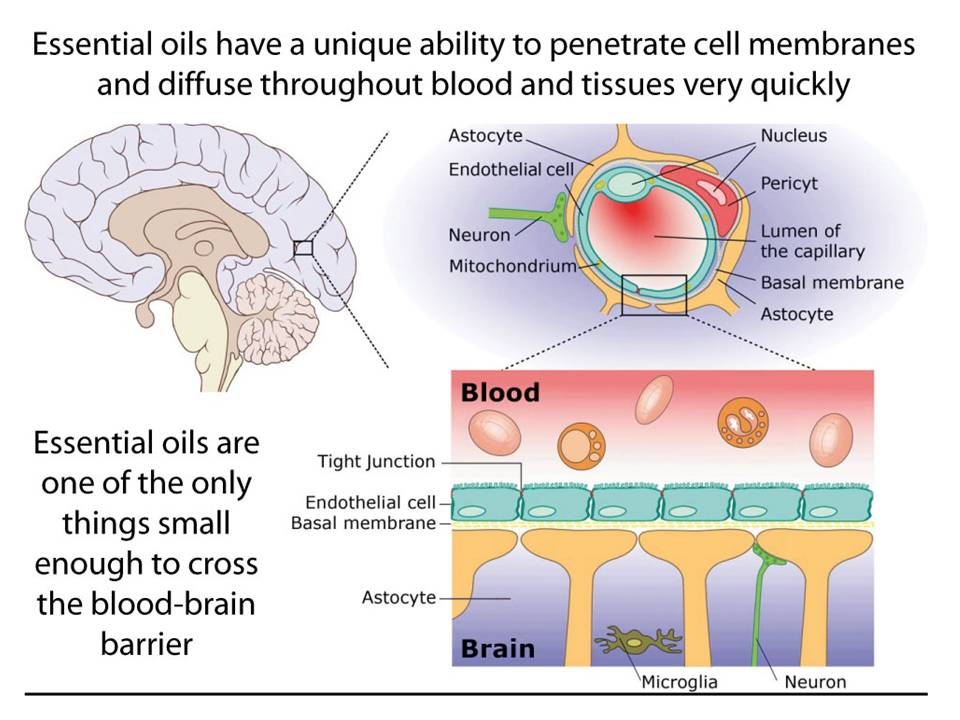
There is a filtering mechanism in our bodies that protect the circulating blood from interacting and damaging brain tissue and cerebrospinal fluid. This natural defense is called the blood-brain barrier. It protects bad things from entering our brain, but also makes it difficult to get things into the brain.

Did you know that approximately 98% of small molecule drugs can not pass the blood-brain barrier? However some of the chemical constituents found in oils like frankincense and sandalwood are known to pass through this blood-brain barrier, allowing them to impact the brain (neurotransmitters) therapeutically.

Other oils that cannot cross over into the blood-brain barrier can still affect the brain through our sense of smell! Ever wonder why we have intense emotional reactions triggered by smell? The smell of grandmas house, bringing feelings of joy. For me, just smelling coffee brewing can trigger an awakening response.

Our sense of smell and our emotions are processed in a part of our brain called the limbic system. The limbic system is responsible for processing emotions, memories, and smell. No other sensory system has the ability to interact with our brain like smell. The amygdala gland, found in our limbic system, has been shown to play a huge part in the storing and releasing of emotional trauma.

(I only use therapeutic grade essential oils that are safe for consumption.
For more information on how to purchase these oils, please feel free to contact me.)
FDA Disclaimer: "These statements have not been evaluated by the Food and Drug Administration. This product is not intended to diagnose, treat, cure, or prevent disease."


More Than Just a Scent


Essential oils are so much more that just a scent to uplift your mood. They are made up of the regenerating, protective, and immune boosting properties of the plants they are extracted from. Essential oils are truly nature's medicine!

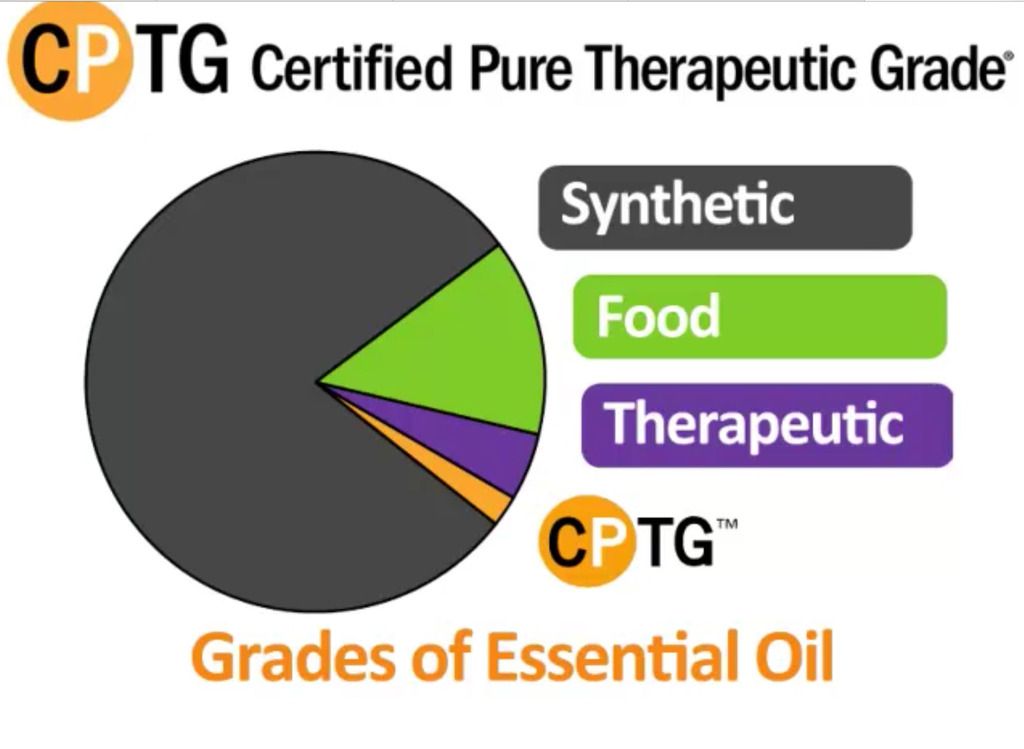
In order for an essential oil to be more than just a scent, it needs to be considered therapeutic grade. Those that are perfume (synthetic) grade quality don't have the same restorative benefits as the oils that are therapeutic grade. An inexpensive bottle of tea tree oil from the grocery store will not have the same effect as one of the quality essential oils I use. Therapeutic grade essential oils are made up of tiny molecules, which are lipid soluble. 
Okay, I'm going to nerd out on a little science lesson here, sorry...
Substances can be either water or lipid soluble.
Soluble simply means that it can dissolve.
Water soluble substances can be dissolved in water.
Lipid soluble substances are dissolved in fat.
Pretty simple.
Stay with me.
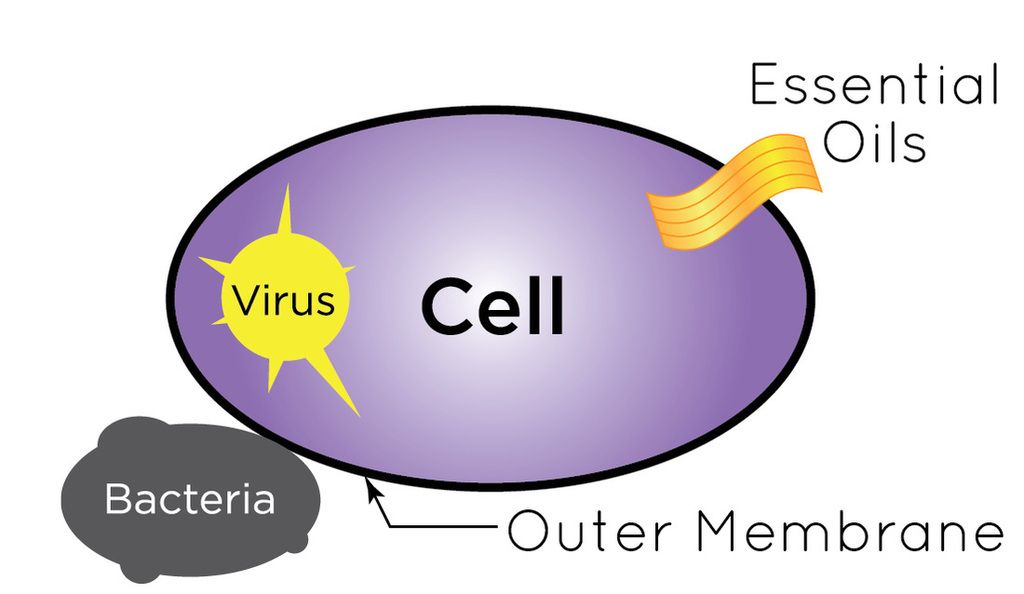
Water soluble substances are very large, and cannot pass through the plasma membranes of a cell.
Lipid soluble substances are tiny, and can pass through the plasma membrane of a cell.
Why does this matter you ask?
Well, inside the nucleus of a cell there is a receptor, which interacts with DNA.

Simply put, by reaching our DNA, pure therapeutic grade essential oils have the potential to interact
with every cell in our body within 20 minutes of being metabolized.
So, in other words, the oils are able to quickly affect our bodies on a cellular level. 

I'm sure all of you have heard of antioxidants. Antioxidants help to reduce damage due to oxygen caused by free radicals. They have been known to help reduce the risks of heart disease, cancer, and slow the aging process.

Free radicals are typically created by environmental factors. Yucky things like pollution, radiation, and cigarette smoke are all considered free radicals. When there are more free radicals than antioxidants in our bodies, cell death occurs, which leads to all kinds of health problems.

Good news is, essential oils are full of antioxidants! 

Other things known to have high antioxidant values are omega-3 fatty acids (fish oil), organic berries, nuts, and sweet potatoes (so try and incorporate those into your diet as well).
                       
It sounds outlandish to some, but essential oils have many, many healing properties. I myself did not believe they could be so varied and dynamic in their uses until I was able to test them for myself. These oils are known to be antibacterial, anti-fungal, anti-infectious, antimicrobial, anti-tumor, anti-parasitic, antiviral, and antiseptic. I didn't believe it, but after experiencing it firsthand I know it's true!

(I only use therapeutic grade essential oils that are safe for consumption.
For more information on how to purchase these oils, please feel free to contact me.)

FDA Disclaimer: "These statements have not been evaluated by the Food and Drug Administration. This product is not intended to diagnose, treat, cure, or prevent disease."


How to Use Essential Oils

What good are essential oils if you don't know how to use them? It's super simple, actually, and not nearly as complicated as you might imagine.There are three different ways to experience the oils. Topically, aromatically, and internally. Each technique is unique in its own way, and there is no right or wrong way to apply them. Just go with whatever you feel most comfortable with.

Topically
Probably the most popular method for essential oil application is topically. When you apply an oil topically, it means that you are applying the oils to your skin. Essential oils are easily absorbed by the skin, and applying the oils topically provides immediate localized benefits to the area that you are applying/targeting. The oils are also absorbed into your bloodstream when used topically, so not only are the benefits localized, but beneficial to the entire body. The pores on your feet are very large and open, which make for a popular location to apply essential oils topically. Another bonus in regards to your feet, there are points on the bottom of your feet that correspond to every part of your body. You can also apply the oils to your head, ears, chest, over your heart, to the back of your neck, and/or on troubled areas.  

Aromatically
One of my favorite ways to experience oils is aromatically, or through smell. You can diffuse essential oils in the air with an electronic diffuser. Just make sure your diffuser does not omit a lot of heat, otherwise it will weaken the essential oil and reduce its potency. If you don't have a diffuser, you can always put a drop of oil in the cup of your hand and inhale, or simple inhale the scent straight from the bottle. When the oils are inhaled they go directly to brain, which has an immediate effect on our mood.

Internally
The use of essential oils internally, or ingesting them, is controversial. People either love it or hate it. To be clear, not all essential oils are to be used internally, so you do have to be careful and read the labels. I enjoy putting lemon essential oil in my water, and I use the oils in recipes quite frequently. I am also a huge fan of essential oil supplements. I know a lot of people who take the supplements daily, myself included. For me, oils in general have been life changing, but the supplements have really balanced me out. I can't say enough about them!


(I only use therapeutic grade essential oils that are safe for consumption.
For more information on how to purchase these oils, please feel free to contact me.)

FDA Disclaimer: "These statements have not been evaluated by the Food and Drug Administration. This product is not intended to diagnose, treat, cure, or prevent disease."


What Are Essential Oils


I know most of what I have been posting involves the use of essential oils. Some of you may have a good idea of what they are, but for those of you who are completely new to essential oils, I am going to break out the the basics for you with a brief introduction. When I first got into oils I wondered how they got them into such a concentrated form to be so effective. 

So, what are essential oils?
Essential oils are the liquids that are extracted from different parts of  plants. These parts can include seeds, bark, leaves, stems, roots, flowers, fruit, and more.

Oils protect the plant from environmental threats, and since our bodies are made from similar building blocks as plants, our bodies are able to benefit from them in the same way a plant would!


How are essential oils extracted from the plant parts?
There are two ways essential oils can be extracted; through steam distillation and expression.

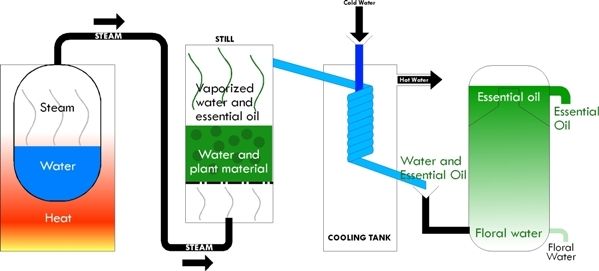
The most common way of extraction is steam distillation method. I'll try to keep it simple, and explain in layman terms. Essential oils evaporate easily when exposed to air. They also do not mix with water, as they are not water soluble. During steam distillation the oils are exposed to a low heat steam in an airtight chamber. The steam flows into a second chamber, where it cools further, and separates into water and essential oils. As mentioned, oils are not water soluble, so it is easily separated during the distillation process.


The expression method is mainly used for extracting oils from citrus fruits. The oil sacs of these citrus fruits are found in the peel or rind. These parts are separated and then cold pressed with very low heat and pressure to extract the oils. 

There are lots of essential oil companies out there. Why the variance in cost? What is so important about having pure, therapeutic grade essential oils?

The therapeutic value of an oil is greatly affected by its chemical constituents. Constituents are affected by many different variables: part of plant from which oil was produced, soil, fertilizer, geographic region, climate, altitude, time of harvest, season, and method. Also, the process of obtaining higher grade oils is not very cost effective. Essential oils are 50-70 times more powerful than their herbal counterparts. For example, one drop of peppermint essential oil has the same benefit as 28 cups of peppermint tea. It can require several hundred, even several thousand, pounds of plant material to produce one pound of pure essential oil. The distillation process plays a huge factor in determining the therapeutic qualities in an oil. When oils are distilled under high temperature and high pressure, they lose some of their effectiveness. So even though they might all smell equally good, some will lack most (if not all) of the therapeutic qualities needed for personal holistic health care. All of these factors make for a very complicated, labor intensive, scientific process which is why you see the variance in price. In short, you get what you pay for!

For more information on how to purchase these oils, please feel free to contact me.

FDA Disclaimer: "These statements have not been evaluated by the Food and Drug Administration. This product is not intended to diagnose, treat, cure, or prevent disease."


The History of Essential Oils


I'm obviously a big fan of essential oils. I'm also a big fan of history. Things just seem to make so much more sense to me when I learn about them from the ground up. Or maybe that's just the OCD in me? If I'm going to take the time to learn about something, I like to learn everything about it. Hence, all of my obsessions. So, if you are anything like me keep reading to learn some fascinating tidbits about the history of essential oils...

The use of essential oils has been recorded since the earliest of civilizations. The Egyptians  have been credited as the first civilization to use essential oils. The Egyptians valued their oils for both aromatic and medicinal purposes. Some of the oils that they used that we still use today include Frankincense, Myrrh, Cedarwood, Coriander, Juniper, and more. The Ebers Papyrus, one of the oldest and best preserved documents that we know of, clearly states Frankincense as being used to treat different ailments. King Tutankhamen was buried with 35 alabaster jars that were used to hold precious oils. Although the jars remained in the tomb, the oils had been stolen by tomb robbers. So clearly, the oils were far greater in importance during ancient times than we can imagine today.

The Greeks idolized the Egyptians for their use in aromatherapy. Greek culture believed all fragrant plants to be of divine origin. Greek physicians concluded that the oils had either stimulating or sedative properties. They also believed the oils had strong antiseptic properties. Hippocrates was said to have fumigated the entire city of Athens with oils to help lessen the impact of the plague epidemic. Hippocrates also believed that taking daily aromatherapy baths and receiving daily aromatic massages was the key to good health. I would have to agree, sign me up!

The Chinese are believed to have been proponents of the use of essential oils as well. Some historians say that the Chinese started using the plants for healing around the same time as the Egyptians. Aromatherapists in China believed that using a plants fragrance set the plant's soul free. The wealthy used the oils extravagantly; scenting their homes, clothing, cosmetics, paper, ink, and places of worship.

Ancient Roman culture also used aromatics enthusiastically. They used the oils in nearly every imaginable way. They scented their baths, bodies, hair, clothes, beds, the walls of their homes, and their military flags. Roman soldiers even carried pouches of aromatic seeds when out on duty.

The ancient people of Israel have many clearly documented texts citing the importance of essential oils. The Old Testament of the Bible and the Torah reference the use of oils for aromatics, ointments, incenses, and anointing. The New Testament references the Wise Men giving the gift of Frankincense and Myrrh to the newborn Christ.

Between 1000BC and 400BC Arabia was at the center of profitable trade routes. Frankincense was said to have been the largest trade commodity of the time, and brought incredible wealth to Arabia. The trade route was also referred to as the Frankincense Trail. The trails were so well traveled that satellites are still able to pick them up. The Arabians were the first to use the steam distillation process of extracting essential oils that we currently use today.

After the Arabians discovered the steam distillation process, the Europeans began distilling their own essential oils and creating their own perfumes. Just as the Romans, Europeans also fumigated towns with aromatics when the Great Plague became widespread. In London homes and workplaces were fumigated daily, most commonly with frankincense. By the 1500s, essential oil usage for medicinal benefits was commonplace.

Slowly, over time, essential oils lost their momentum. It wasn't until the mid 19th century that essential oils regained popularity. During that time oils were used for fragrance in food, cosmetics, and soaps; as opposed to medicinal purposes. Today, with rising health care costs, increasingly resistant strains of bacteria, and the constant news streams regarding the negative health impacts of our food and products the public is questioning how we are living.  It's no wonder why studies are showing that people are turning to alternative medicine and a holistic approach to health.

During the past decade in particular, we have seen a huge shift in our society to a more mainstream interest in Complementary Alternative Medicine. We cannot expect our health care plans to provide us with optimal levels of wellness. Of course there are some very obvious reasons we still need a health care plan, I am not discounting that in any way. What I am saying is that we are the ones who need to take control of our own health. We need to be personally responsible for all areas of our health, not only physically; but emotionally, mentally, and spiritually as well. We need to take control over the things that impact our daily lives; things that undoubtedly determine optimal wellness, and a better quality of life.

As documented throughout history, you do not need to be a doctor or health care professional to take control of your own health. Because of the simplicity of essential oils, many people have already began to make life-changing choices in their daily routines to live a more natural, safe, and healthy life. My hope is that all of you reading this will join me in taking an interest in high quality essential oils. They are 100% pure aromatic extracts, contain no artificial ingredients, and are tested to be free of contaminants such as pesticides or other chemical residues. Like anything you should be sure to do some research, and exercise caution when using them. When in doubt please consult with a doctor.

(I only use therapeutic grade essential oils that are safe for consumption.
For more information on how to purchase these oils, please feel free to contact me.)

FDA Disclaimer: "These statements have not been evaluated by the Food and Drug Administration. This product is not intended to diagnose, treat, cure, or prevent disease."


Healthy Living

What exactly does healthy living mean to you? It seems kind of silly to ask. I mean, it sounds really simple, right? We all vaguely know what being healthy is; healthy mind, healthy body, strong spirit. Subconsciously I think a good majority of us try to live a healthy lifestyle, as practically as we can for our set of circumstances anyway. Sure, we all have our 'cheats', but we usually try to justify or offset the bad with something good. There is so much more to it than that, though. Because wellness is so dynamic, we often focus on a few things that are important to us, say our bodies (eating right and exercising), and are left imbalanced because we are not looking after our mental or spiritual self. We are not achieving an optimal level of wellness when we are out of balance. Living a healthy lifestyle is so much more attainable when you have clear definitions of what it means to be healthy, and making a list of actions or a strategy for attaining them.

Who thought healthy living would require strategizing? Sheesh, I'm not going to lie; the idea of investing even more time into wellness than I already do seems a little daunting. It's no wonder why so many of us are unfulfilled with our current state of health. We just don't have the time. For that reason, I'm going to try and make it a little easier on you and list some of the steps you can make in each area of healthy living. Hopefully that can get you started in the right direction. I know it did for me. But, alas, I'm a work in progress. For that reason, I'll be posting tidbits of information and tips that I find along my never-ending journey to wellness. I hope you can find them to be of benefit!

Things we need to keep our minds emotionally healthy:
Positive mental attitude! Keeping a positive self-image and being self-supportive. Giving and receiving forgiveness, love, compassion, and relationships. Relationships that bring joy and cause you to laugh and experience happiness. Not just with others, but with yourself as well. Learn to love yourself. More on this later :)

Things we need to keep our bodies healthy:
Good diet, regular exercise, healthy weight, adequate rest, and stress management.

Things we need to be spiritually grounded:
Some people find that they need to be spiritually grounded by believing in a higher power, myself included. But in general, being spiritually grounded means trusting your instinct and believing in yourself! Embrace your creativity and allow yourself to be at peace inside of your body.